

Description
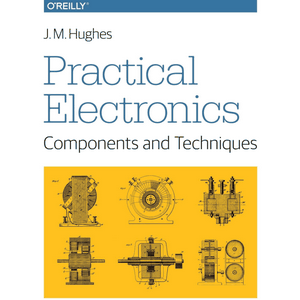
Practical Electronics is designed as a comprehensive, practical, step-by-step guide to the fascinating world of electronics, and attempts to explain complex engineering concepts in a simple, understandable language for everyone. Focusing on a hands-on, hands-on approach, the author first introduces the reader to the most basic concepts such as voltage, current, and resistance, and then goes on to explain in detail the operation of various hardware components. In this work, resistors, capacitors, diodes, transistors, and integrated circuits (ICs) are examined not in a purely theoretical manner, but from the perspective of their real-world applications in industrial applications and personal projects. The book is written in such a way that both students and beginners can benefit from it, and experienced engineers can refer to it for a review of workshop techniques and circuit troubleshooting.
The book then moves on to more practical areas such as professional soldering skills, how to read and analyze schematics, and the proper use of measurement tools such as a multimeter and oscilloscope. The author provides step-by-step building projects to help readers gain the confidence to design and build their own custom circuits. Special sections of the book are also dedicated to troubleshooting faulty circuits and techniques for identifying burned or inoperative components, further enhancing the practical value of this work. With the growing popularity of the Internet of Things and expandable boards such as Arduino and Raspberry Pi, this book provides an incredibly solid hardware foundation for hardware programmers to turn their digital ideas into physical realities.
Book Features
- Completely practical and project-based education of basic and advanced electronics concepts without getting involved in complex mathematics.
- A detailed and visual guide to familiarizing yourself with electronic components, their internal structure, and how to test the health of the component.
- Training in workshop techniques such as soldering, printed circuit board (PCB) fabrication, and the use of laboratory tools.
- Dedicated chapters on electronic circuit troubleshooting protocols and troubleshooting common design errors.
Book specifications
- Publisher: Oreilly
- Instructor/Author: John M. Hughes
- Number of pages: 1218
- Number of chapters: 17
- Format: PDF
Headlines

Pictures
User Guide
Extract the file and run it with the appropriate software.
Download link
File(s) password: www.downloadly.ir
File size
13.2 MB