

Description
NetBox Automation with Ansible & Python Masterclass. This course provides a comprehensive overview of how to use NetBox as a single source of truth and network automation orchestration tool using Ansible and Python. This advanced course helps network infrastructure professionals transform their network information management system from traditional, manual Excel files to a modern, centralized, and automated database. The NetBox platform is recognized as the industry standard for network information management, and in this course, learners learn how to install, configure, and manage large-scale infrastructures. Course topics include system architecture, installation on different operating systems using Docker, building organizational structures, modeling racks, hardware devices, IP address space management (IPAM), and VLANs. A large part of the course is also dedicated to programming and automation, and participants learn how to automate repetitive network processes using Ansible, the official PyNetBox library, and the REST API. Other advanced topics covered in this course include branching, custom scripting, using NetBox as a dynamic inventory for Ansible, integration with external data sources such as GitHub, and using utility plugins such as topology visualization and BGP. This course provides network and automation engineers with a comprehensive perspective on implementing modern network engineering.
What you will learn
- Single source of truth management: Mastering NetBox as a central database of network information for automation in multi-vendor environments.
- Complete installation and setup: Implementation and deployment of NetBox using Docker on Windows, macOS, and Linux operating systems (AWS EC2).
- Automation with Ansible and Python: Manage the lifecycle of network infrastructure using Ansible modules and Python scripts.
- Organizational structure modeling: Building and managing regions, sites, locations, and tenants at large scales.
- Rack and equipment modeling: End-to-end orchestration of racks, chassis modules, and port and cabling management.
- Advanced IPAM and VLAN management: Specialized implementation of IP addressing sub-systems, automatic management IP allocation, and SVI creation.
- Using REST API: Master working with Netbox APIs using Postman and Swagger for filtering and paging data.
- Advanced NetBox capabilities: Use of Gate-style branching and helper tools for secure data staging.
- Integration with data sources: Connect Netbox to external sources such as GitHub and AWS S3 for automatic data synchronization.
- Custom Script Development: Build custom scripts within Netbox to create, update, and check group compliance of equipment.
- Dynamic Network Configuration: Use the Netbox Inventory plugin as a dynamic repository for deploying and configuring devices with Ansible.
- Install popular plugins: Configure and launch useful plugins such as Topology View and BGP support.
This course is suitable for people who:
- Network engineers and administrators: professionals at various levels who are looking to replace manual methods with modern systems.
- Network Architects: Infrastructure designers responsible for network planning and IP management (IPAM) strategies.
- Automation and NetDevOps Engineers: Professionals who use tools like Ansible, Python, and Infrastructure as Code (IaC).
- Data Center and Infrastructure Engineers: Teams managing large-scale physical assets and rack layouts.
- Software and Python Developers: Programmers who build internal tools or integrations related to network inventory.
- Site Reliability Engineers (SRE): People who bridge the gap between traditional networks and cloud and hybrid infrastructures.
NetBox Automation with Ansible & Python Masterclass Course Details
- Publisher: Udemy
- Instructor: Shibi Dev
- Training level: Beginner to advanced
- Training duration: 19 hours and 1 minute
- Number of lessons: 139
Course topics
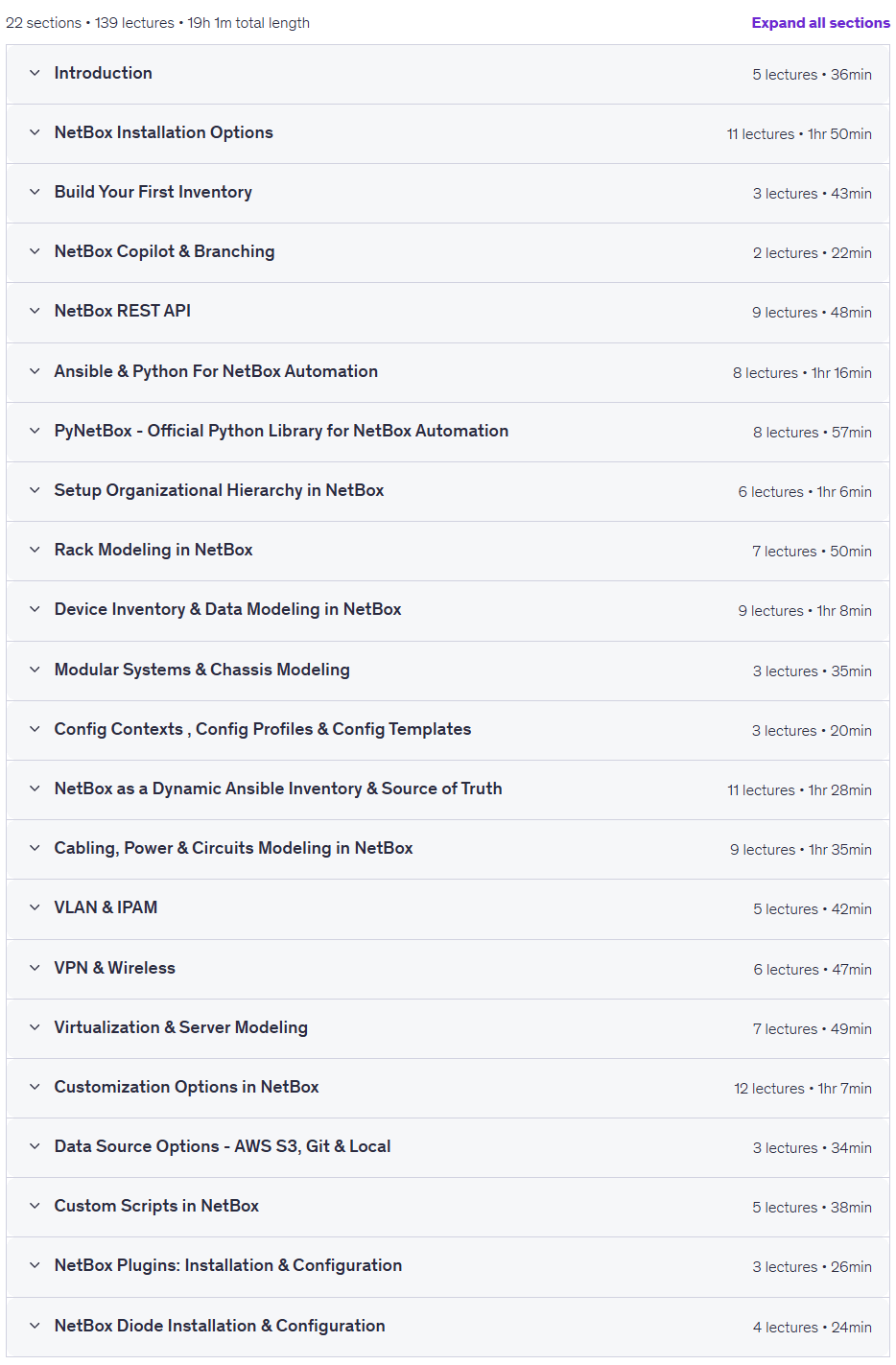
Prerequisites for the NetBox Automation with Ansible & Python Masterclass course
- No Prior NetBox Experience Required: We start from the absolute basics, including architectural theory and installation.
- Fundamental Networking Knowledge: A basic understanding of networking concepts (IP addressing, VLANs, and Routing) is recommended
- Basic Python Knowledge: Familiarity with Python basics (variables, lists, and loops) will help, though code examples
- Basic Ansible Familiarity: Understanding how YAML files and Playbooks work is beneficial, as we use them extensively for automation.
Course images

Sample course video
Installation Guide
After Extract, view with your favorite player.
Subtitles: None
Quality: 1080p
Download link
Rapidgator link
File(s) password: www.downloadly.ir
File size
17.9 GB