

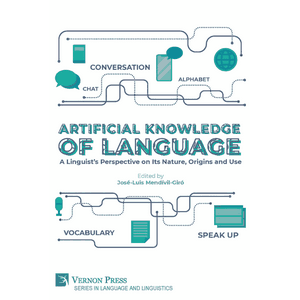
Description
Artificial Knowledge of Language explores the intersection of artificial intelligence, language structure, and cognitive linguistics. The author attempts to analyze the real-world capabilities of large language models in understanding meaning, drawing on the scientific principles of linguistics. He reveals the fundamental differences between statistical word processing by machines and the deep, intuitive, and natural human understanding of language, and challenges the philosophical and structural challenges of this field.
In another section of the book, the author discusses how language functions as a means of representing knowledge in the human mind and why artificial intelligence systems still face serious limitations in achieving this kind of awareness. This work is a valuable guide to understanding the future of human-machine interaction from a linguistic perspective, helping readers look beyond the hype to the scientific realities of this technology.
Book Features
- A close analysis of the structural differences between human natural language and machine computational codes
- Exploring the limitations of artificial intelligence in understanding metaphors, allusions, and cultural contexts of language
- A critical and scientific approach to claims about achieving artificial general intelligence (AGI)
- Presenting modern linguistic frameworks and theories for evaluating large language models
- Suitable for cognitive science researchers, natural language processing (NLP) engineers, and philosophers of mind
Book specifications
- Publisher: University of Zaragoza
- Instructor/Author: José-Luis Mendívil-Giró
- Number of pages: 242
- Number of chapters: 8
- Format: PDF
Headlines

Pictures
User Guide
Extract the file and run it with the appropriate software.
Download link
File(s) password: www.downloadly.ir
File size
2.7 MB