
Descriptions
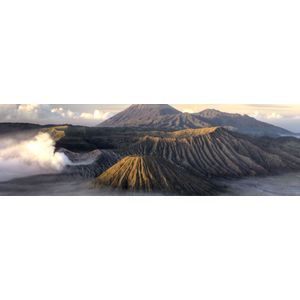
The World’s Most Fascinating Geologic Events, Earth is a restless planet. Volcanoes erupt, continents move, oceans rise and fall, and earthquakes can shake the ground without warning. For much of human history, these forces seemed like divine wrath or random chaos, but geology now helps us understand them as dynamic processes that have shaped human history, influenced where civilizations developed, and driven migrations caused by famine and disease. In this course, Professor Michael E. Wysession of Washington University in St. Louis guides you through 24 lectures exploring volcanic and seismic activity, dramatic climate shifts, and powerful storms, revealing the close connections between geological events and human affairs. Drawing on geology, history, anthropology, and archaeology, the course revisits natural events that have inspired awe and fear and changed the course of history.
Travel across the world and through time to examine events such as the 1815 eruption of Mount Tambora and the resulting Year Without a Summer, solar cycles and the Little Ice Age, rising sea levels after the last Ice Age, major earthquakes in New Madrid, Japan, San Francisco, and Lisbon, the eruptions of Krakatau and Iceland’s Laki volcano, extreme weather, El Niño and La Niña, and the Snowball Earth and Younger Dryas hypotheses. The lectures explore how these phenomena affected harvests, famines, pandemics, mass migrations, technological systems, and the rise and fall of civilizations, including Rome. They also consider the origins of the Moon and the possibility that human activity marks a new geological epoch, the Anthropocene. Combining scientific explanations with vivid historical storytelling, the course shows how Earth’s physical processes and human history are inseparably connected.
What you’ll learn
- Explain how geological processes have influenced human history and the development of civilizations.
- Describe the causes and consequences of major volcanic eruptions, including Tambora, Krakatau, and Iceland’s Laki volcano.
- Understand how earthquakes occur and examine the historical impacts of major earthquakes in New Madrid, Japan, San Francisco, and Lisbon.
- Explain how solar cycles, volcanic activity, and climate shifts contributed to the Little Ice Age and periods of famine.
- Analyze the relationships between sea-level rise, post-Ice Age changes, human migration, and early civilization.
- Understand how El Niño and La Niña can influence drought, famine, migration, and disease outbreaks.
- Examine the effects of hurricanes, extreme weather, and solar storms on societies and technology.
- Explore geological hypotheses such as the Channeled Scablands, Snowball Earth, and the Younger Dryas.
- Connect geological events with pandemics, economic disruption, and the rise and fall of civilizations such as Rome.
- Evaluate the evidence and scientific questions surrounding the Anthropocene and the Moon’s formation.
Who this course is for
- Learners interested in geology and the major natural events that have shaped Earth.
- People who want to understand how geological and climate events influence human history.
- Students of geology, Earth science, environmental science, history, anthropology, or archaeology.
- Anyone interested in volcanoes, earthquakes, extreme weather, and climate change through history.
- History enthusiasts who want to explore the environmental factors behind famines, pandemics, migrations, and the rise and fall of civilizations.
- Lifelong learners who enjoy science explained through historical examples and storytelling.
Specificatoin of The World’s Most Fascinating Geologic Events
- Publisher : The Great Courses
- Teacher :
- Language : English
- Level : All Levels
- Number of Course : 24
- Duration : 13 hours and 6 minutes
Content of The World’s Most Fascinating Geologic Events

Pictures

Sample Clip
Installation Guide
Extract the files and watch with your favorite player
Subtitle : Not Available
Quality: 720p
Download Links
Password file(s): www.downloadly.ir
File size
10.96 GB