


Description
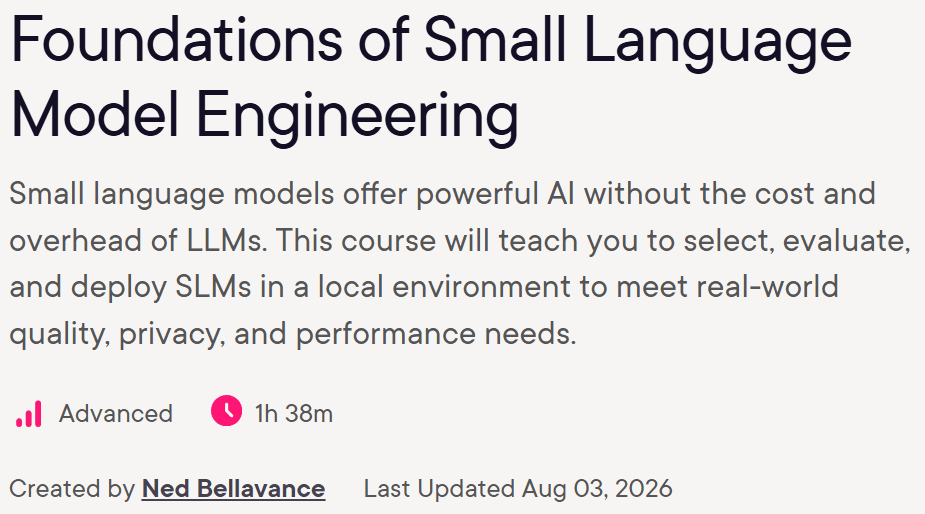
Foundations of Small Language Model Engineering. This course examines the principles of small language model (SLM) engineering and how to select, evaluate, and deploy them in local environments to meet real-world quality, privacy, and performance requirements. Deploying large language models (LLM) in operational environments often involves high costs, latency, privacy concerns, and heavy infrastructure requirements that many real-world application scenarios cannot accommodate. This course provides the skills and knowledge needed to select, evaluate, and deploy small language models that meet the quality and performance requirements of systems. This course examines the structure and characteristics of small language models and shows how their architecture, hardware requirements, and performance tradeoffs compare to large language models. Additionally, methods for comparing different families of models, analyzing model credentials and licenses, and evaluating them based on specialized criteria and benchmarks rather than relying on generic scorecards will be taught. Finally, how to set up a local server environment, run the inference process, and create a documented performance baseline will be examined. Upon completion of this course, students will have the skills to confidently select and deploy the appropriate small language model for their operational applications and can benefit from the power of AI without the heavy infrastructure costs.
What you will learn
- Understanding Small Language Models: Understand the definition of a Small Language Model (SLM) and examine its architecture, hardware requirements, and performance tradeoffs compared to large models.
- Specialized evaluation of models: Learning how to compare different model families, reading model IDs and licenses, and evaluating them based on benchmarks appropriate for specific tasks.
- Local deployment and execution: How to configure a local serving environment, run the inference process, and set up the appropriate infrastructure.
- Performance evaluation: Establish a baseline for performance measurement to ensure quality, speed, and privacy criteria are met in real projects.
- Correct model selection: Gaining the ability to select the best small language model appropriate to the operational needs and constraints of the system.
This course is suitable for people who:
- Artificial Intelligence and Machine Learning Engineers: Specialists who seek to optimize costs and infrastructure using small language models.
- Software developers: Programmers who want to implement natural language processing capabilities in local environments without being dependent on the cloud.
- System and infrastructure architects: Individuals responsible for managing hardware resources, reducing latency, and maintaining data privacy in the organization.
- Technical Project Managers: Decision makers who want to strike the right balance between cost, speed, and quality of output in AI projects.
Course details: Foundations of Small Language Model Engineering
- Publisher: Pluralsight
- Instructor: Ned Bellavance
- Training level: Advanced
- Training duration: 1 hour and 38 minutes
Course headings
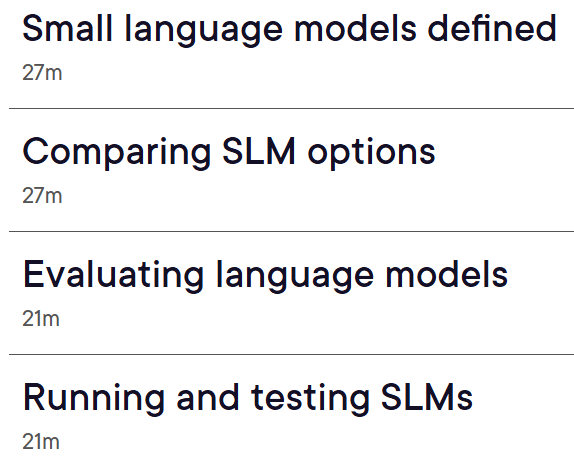
Course images
Sample course video
Installation Guide
After Extract, view with your favorite player.
Subtitles: English
Quality: 720p
Download link
Rapidgator link
File(s) password: www.downloadly.ir
File size
413 MB