

Description
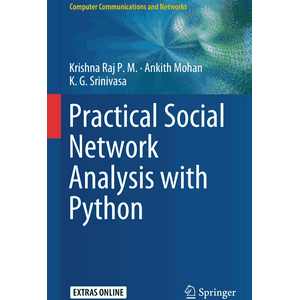
Practical Social Network Analysis with Python focuses on analyzing social networks from a computational perspective and introduces readers to the fundamentals of graph and network theory. The authors explore various metrics and indicators used to measure and evaluate the structure of a social network. In today’s world, where social networks have become so large, understanding their algorithmic structure is of great importance. By combining mathematics, theoretical concepts, and computational techniques, this book provides a platform for users to analyze real-world data.
The book teaches various methods of graph analysis using Python and examines techniques such as filtering, clustering, and rule extraction. Also, famous phenomena such as “small world” and models of information dissemination in the network are explained in detail in this book. Throughout the chapters of the book, the audience becomes familiar with the structure of the web as a huge network, stochastic graph models as base models (Null Models) for comparison with real networks, and strategies for identifying influential and key nodes in a social network.
Book Features
- Teaching social network analysis with a computational approach using Python
- Investigating mathematical indicators and criteria for measuring network structural behaviors
- Implementing advanced techniques such as clustering, filtering, and graph analysis
- Explaining new network theories such as the small world phenomenon and information diffusion patterns
- Step-by-step guide to identifying key and influential users and nodes in networks
Book specifications
- Publisher: Springer
- Lecturer/Author: Krishna Raj P. M
- Number of pages: 355
- Number of chapters: 15
- Format: PDF
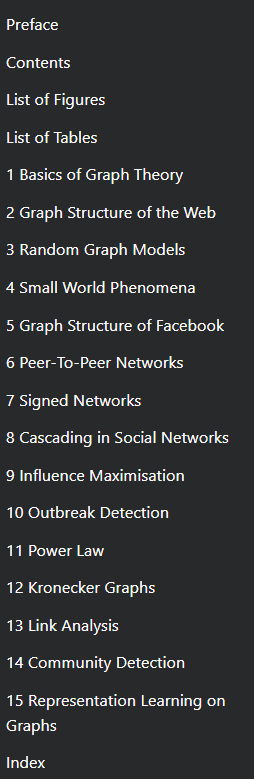
Headlines
Pictures
User Guide
Extract the file and run it with the appropriate software.
Download link
File(s) password: www.downloadly.ir
File size
10.2 MB